


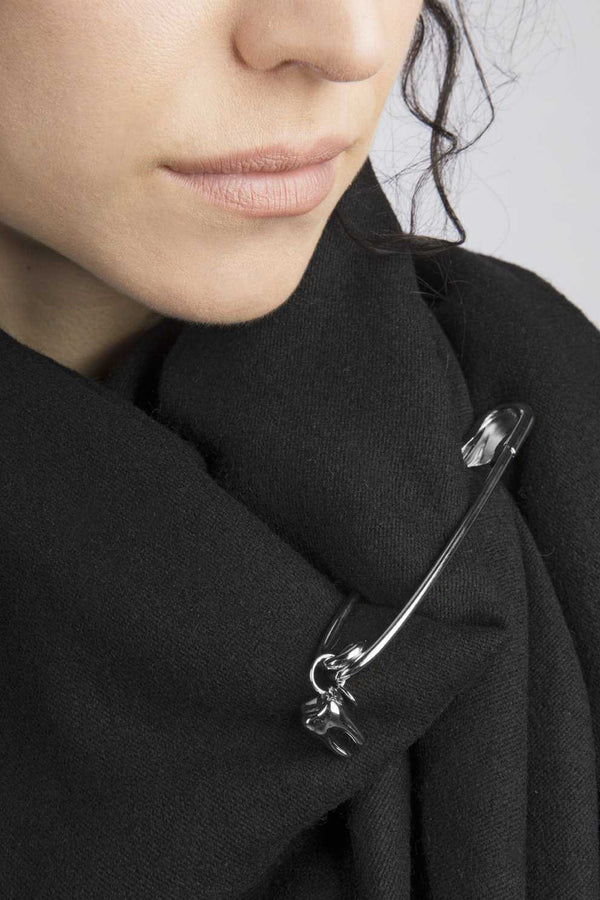
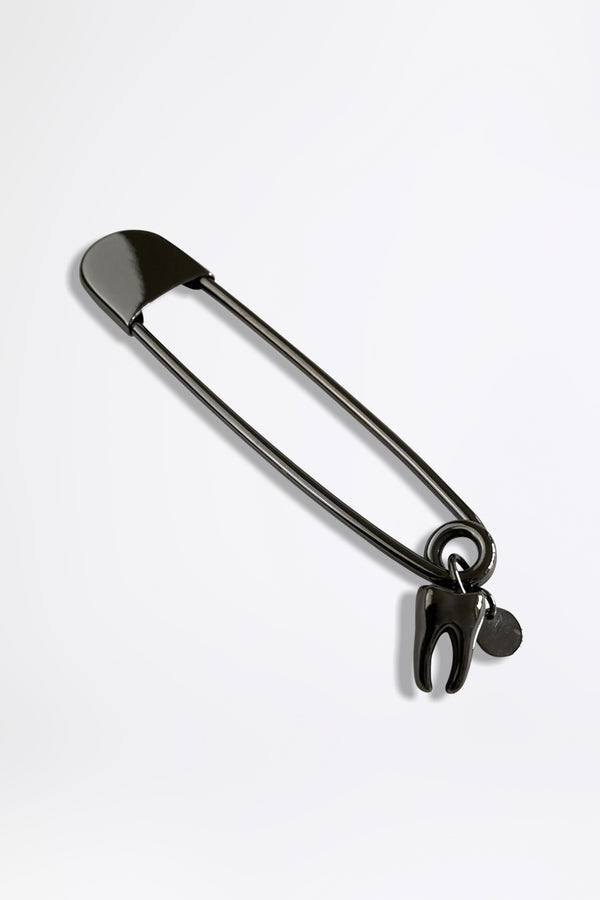
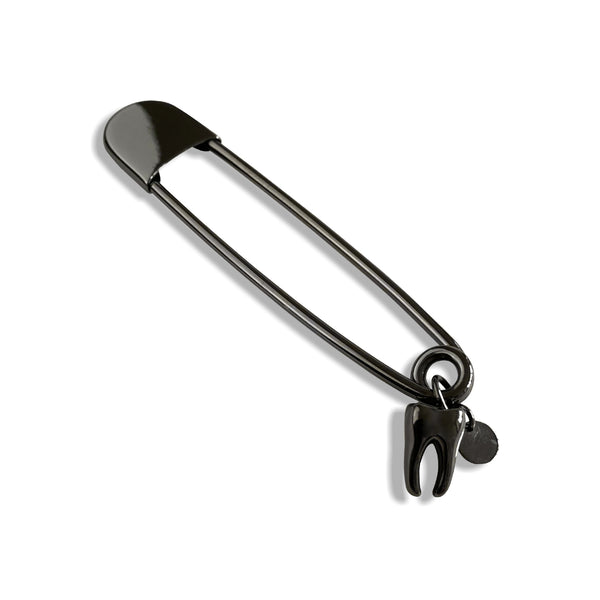


JEWELRY AT ESTHER PERBANDT
More Is More
Jewelry, for Esther Perbandt, is never an afterthought — it is presence.
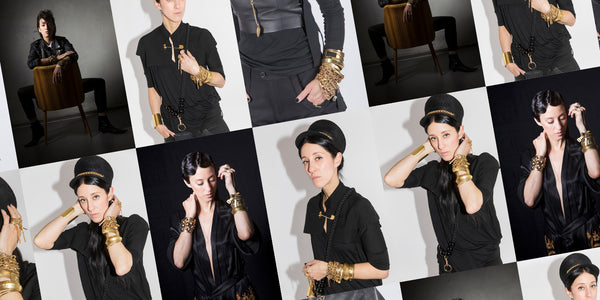
She describes herself, half-serious, as “decorated like a Christmas tree.” And indeed, encountering her in person is an experience of light and sound: bracelets cascading along both arms, rings catching every movement, metal meeting metal in a rhythm that has become unmistakably her own.
You don’t just see Esther — you hear her. A soft, constant collision of pieces, like hi-hats marking time. Silence is not part of the vocabulary. Even in interviews, the “Esther sound” is inevitable: either restrained through discipline, or avoided entirely by removing the jewelry.
“The more and the heavier, the better.”
Power, Not Decoration
There was a time when adornment was seen as contradiction — when intellect and femininity were expected to cancel each other out.
Esther grew up around women who believed that strength required restraint: no excess, no ornament, no softness. Jewelry, lipstick, nail polish — all perceived as diminishing seriousness.
That narrative no longer holds.
Today, power expresses itself differently. It allows contradiction. It embraces complexity. A woman can layer necklaces, stack rings, exaggerate presence — and remain entirely in control. Not despite it, but through it.
Jewelry, here, is not decoration. It is amplification.
The First Piece
The story begins early.
At eight years old, Esther received a soldering iron and silver wire — a moment that quietly set everything in motion. She began making pieces instinctively: small necklaces, bracelets, earrings. Objects not of perfection, but of curiosity.
Soon after, she took them outside — arranging them carefully on a blanket in front of her parents’ home, waiting. No sales followed. Not a single piece.
It didn’t matter. The value was never in selling. It was in making.
Form Becomes Object
Jewelry at esther perbandt does not follow trend — it follows process.
Each piece begins as an idea, often drawn from the most ordinary source: a shoelace, a knot, a gesture. Twisted, manipulated, fixed in place, transformed from something soft into something permanent.
These early forms are lacquered, scanned, translated into molds. Prototypes emerge, are rejected, refined, reconsidered — until the object reaches a point of inevitability.
Time is part of the material. So is precision.
Many of these pieces are developed in Pforzheim, Germany’s historic “city of gold,” in collaboration with manufacturers whose legacy includes work for Dior. Craft here is not nostalgic — it is exacting, contemporary, and uncompromising.
Matter and Surface
Material is never neutral.
Early collections were produced in brass, finished with gold or silver plating — a conscious decision to keep pieces accessible. But plated surfaces carry time within them: they shift, they wear, they respond to the body.
Rather than resist this entirely, Esther evolved the material language.
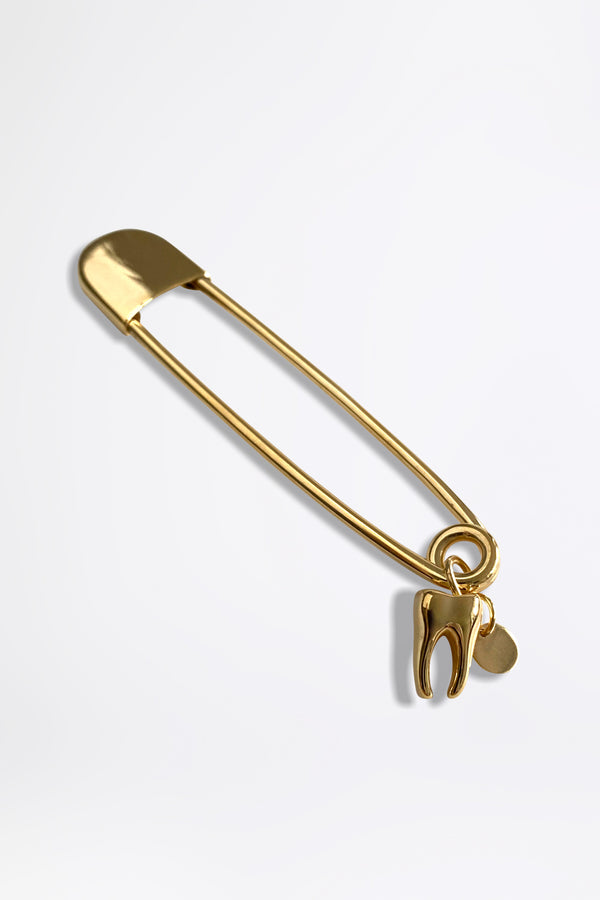
Stainless steel became central — a material that holds its tone, its clarity. Gold is achieved through PVD coating: a process that bonds metal at a molecular level, creating a surface that is harder, more resistant, more enduring than traditional plating.
It is jewelry designed not only to be seen, but to be lived in.
Between Access and Exclusivity
Accessibility remains part of the philosophy — but so does rarity.
Select pieces can be realized in solid 925 silver or 333 / 585 gold, on request. Stones, diamonds, individual variations — each commission becomes a dialogue between wearer and object.
Because ultimately, jewelry at esther perbandt is not about completion.
It is about extension — of the body, of identity, of presence.
